How much is Late Payment Costing your Business ?
“Most businesses know who owes them money.
Few know the true cost of unpaid invoices.”
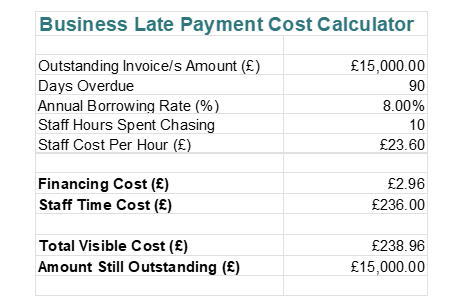
How many hours do you / your staff spend ‘politely’ chasing up your overdue debts??
Think about it …..
You should be entitled to –
- Late Payment on each invoice
- Interest accrued from due date of invoice
- Reasonable legal costs
Don’t waste your time chasing your debtors – let the experts work on your behalf and claim all of the above.
As long as your Terms and Conditions reference the The Late Payment of Commercial Debts (Interest) Act 1998 –
Look what Lane & Co could recover for you …..
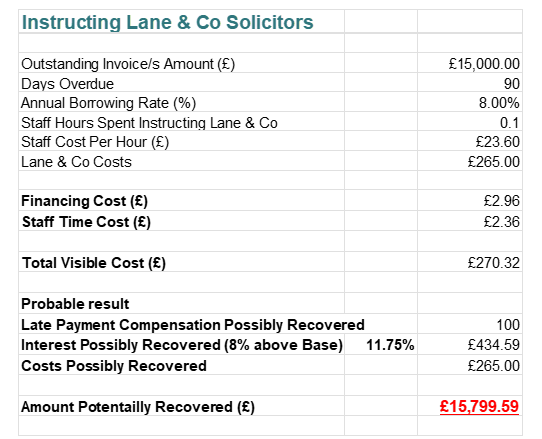
Obviously the more invoices there are the more compensation can be recovered, interest continues to accrue on a daily basis, the older the debt the more interest should be claimed.
NB:-
If your Terms & Conditions do not reference the Late Payment of Commercial Debts (Interest) Act 1998, review and update them now to safeguard your rights on overdue payments, Lane & Co can help you with this Terms and Conditions Consultation – Lane & Co. Solicitors

How do you gauge when the correct time is to engage legal assistance?
“The 7 Warning Signs a Debt Will Become Unrecoverable”
- Payment Promises Are Repeatedly Broken
The debtor says:
“The payment will be made next Friday.”
Next Friday arrives and nothing happens.
Then:
- Another promise is made
- Another excuse follows
- No meaningful payment is received
A pattern of broken promises often indicates either cash-flow problems or an attempt to delay recovery action.
- Communication Suddenly Becomes Difficult
Previously the debtor:
- Answered calls
- Replied to emails
- Responded quickly
Now:
- Calls go unanswered
- Emails are ignored
- Messages are acknowledged but not addressed
When communication drops off, recovery rates tend to decline.
- The Debt Passes 90 Days Overdue
The older a debt becomes, the harder it generally is to recover.
Many businesses wait:
- 30 days → “We’ll give them time.”
- 60 days → “We’ll chase again.”
- 90+ days → Serious concern.
Businesses should seriously consider early formal recovery action.
- The Debtor Raises New Disputes After the Invoice Is Due
Common examples:
- “We’re not happy with the work.”
- “The invoice amount isn’t correct.”
- “We’re reviewing the contract.”
Particularly if:
- No complaint was raised before
- The work was accepted
- The dispute appears only after payment becomes due
This can be a tactic to delay payment.
- Requests for Instalment Plans Increase
A genuine payment plan can be positive.
However, warning signs include:
- Multiple revised payment plans
- Missed instalments
- Requests to reduce payments
- Requests for more time
These can indicate deteriorating financial health.
- Signs of Financial Distress Appear
Examples include:
- Staff redundancies
- Closure of offices
- Suppliers demanding payment
- County Court Judgments (CCJs)
- Adverse credit reports
- Industry rumours of financial difficulties
When insolvency becomes a possibility, speed is critical.
- Other Creditors Are Already Taking Action
If a debtor is facing:
- Legal claims
- Statutory demands
- Enforcement action
- Multiple creditor disputes
you may be joining a queue of creditors competing for the same limited funds.
The earlier action is taken, the better the prospects of recovery.
If any of these 7 signs sound familiar – You must act fast –
Delay costs money.
Act now before overdue debts become bad debts
Pre-Action Protocol Letter Before Action